630-665-2500
128D S. County Farm Road, Wheaton, IL 60187

Recent Blog Posts
What You Should Know About Selling Your Home This Winter
 Most real estate agents and attorneys will tell you that that the spring and summer are the most popular seasons for buying a new home. As a result, they are also the seasons during which many people will sell their home, since, without a home that is for sale, the buyer cannot buy, obviously.
While it is true that spring and summer are traditionally the prime home-buying seasons, if you are ready to move now, there is no reason to wait until winter is over. With the right guidance, selling your home during the colder months could help you realize an excellent return on your investment.
A Smaller, More Competitive Market
Since springtime is allegedly the “best” time to sell a home, many owners throughout the region are likely to wait until the weather breaks before they list their homes. This means that if you decide to wait as well, your home will be on the market with dozens, if not hundreds, of homes, many of which will probably be in and around your neighborhood.
The Many Benefits of Drafting a Living Will
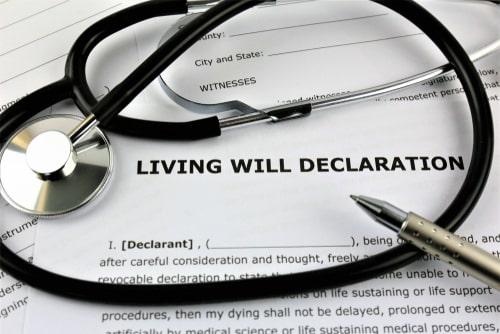 A living will is a type of advance health care directive that allows a person to make decisions ahead of time about their wishes regarding medical treatments and end of life care. It is not a pleasant thought to have, but have you ever wondered what would happen if you were incapacitated and could not express your wishes regarding the type of medical care you do and do not want to undergo? For example, if a serious car accident leaves you in a permanent vegetative state, would you want to be kept alive via a ventilator? It can be very emotionally taxing to make the decisions contained in a living will, however, doing so means that your surviving loved ones will not have to make these decisions on your behalf.
A Living Will Lets You Make Decisions About Your Future Medical Care
In a living will, you describe the medical treatments you do and do not want to receive if you become incapacitated and cannot specify this information yourself. Medical treatments commonly discussed in a living will include dialysis, mechanical ventilation, cardiopulmonary resuscitation (CPR), tube feeding, antibiotics and antiviral medications, and palliative care. You will also be able to dictate if you would want to be allowed to spend your last days at home. Many people have strong feelings about organ, tissue, or body donation. In your living will, you can specify that you only wish to be kept on life-sustaining machines for the purposes of organ donation. If you wish to donate your body to a university or other donation program, you will also be able to specify this in your living will, as well as in other estate planning documents.
Five Important Duties of a Commercial Landlord
 When you own and lease out commercial property, such a venture could be extremely profitable. However, you could also face serious risks, especially if you are not properly prepared to handle the responsibilities associated with being a commercial landlord. Some of these risks include the possibility of financial loss or being sued for failing to meet your obligations as the property owner. It is important to understand what these responsibilities are and how to fulfill them. A qualified commercial leasing attorney can help.
Duty #1: Comply With All Applicable Laws
There many different federal, state, and local laws that apply to all property owners who rent out their properties, including commercial landlords. For example, as a commercial landlord, you are not permitted to discriminate against would-be tenants on the basis of certain criteria, including religion, race, and national origin. You must also follow all zoning laws and building codes. If you fail to comply with any applicable law, you could face serious consequences, including legal action.
The Holidays Could Provide the Chance to Discuss Your Estate Plans
 It is hard to believe that the winter holiday season is here again already. By this time next week, you may be getting ready to sit down for Thanksgiving dinner with your family, loved ones, and friends. A few weeks later, many families will get together to celebrate Christmas, Hanukkah, the upcoming New Year. If your family members live in various parts of the country, the winter holidays could be the only time during the year that your entire family is able to be together. Therefore, I might also be the only chance you have to talk about important subjects such as estate planning.
Prepare for the Conversation
It can certainly be difficult to start a discussion about your estate plans. In fact, even just thinking about estate planning can be uncomfortable because doing so requires confronting your eventual death. The conversation, however, is too important to skip completely. There is no need for your estate plan discussion to take many hours, nor does it need to prevent your family from enjoying the holidays. You can control the situation and keep the tone light and positive, but you will need to do a few things in advance, such as:
Are You Considering an REO Property?
 If you have shared with friends and family members that you are in the market for a new home, there is a good chance that someone has at least suggested that you look into buying a foreclosure property. In this context, a foreclosure property is a home that is being sold at auction by a bank because the owner of the property could not keep up with his or her mortgage payments. At a foreclosure auction, there is the possibility of getting a fantastic deal, but not all foreclosure auctions are successful. When foreclosure auction does not result in the sale of the foreclosure property, the property remains under the ownership of the lender and becomes a real-estate owned property or REO.
Understanding a Foreclosure Auction
When a home is seized by the lender during foreclosure, the home is typically put up for sale in public auction. As such, the property will be sold to the highest bidder. However, in many foreclosure auctions, the bidders are not given the chance to walk through or inspect the home before making their bids. In most cases, the highest bidder will also be expected to pay cash for the property immediately following the auction. The combination of these factors makes buying a foreclosure property at auction a rather risky proposition. It is also why some foreclosure auctions do not result in the sale of the property.
Can a No-Contest Clause a Prevent a Will Dispute?
 When a loved one dies, the loss can be very difficult on the surviving friends and family members. The intense emotions of dealing with the loss can often make a grieving family member act in ways that would be otherwise uncharacteristic, leading to serious disputes over a variety of matters. A common point of contention is the deceased person’s will, and serious battles can affect the stability of a family for years to come, if not permanently. In an effort to prevent such issues from tearing apart your family after your death, you may wish to consider including a no-contest clause in your will.
In Terrorem Provisions
A no-contest clause is also known as an in terrorem clause, which is a Latin phrase meaning “by way of threat.” Such a clause may be included in your last will and testament to deter beneficiaries from formally contesting the will. Most no-contest provisions specify that if an heir files a contest to the will, that heir automatically forfeits the portion of the estate intended for him or her. The idea is that, if there is a threat of receiving nothing, or a nominal amount like $10 or $20, a would-be heir is not likely to push for more. It is important to understand that a no-contest clause cannot stop an heir from contesting a will; its only potential impact is to what may happen as a result.
Can I Include My Pets in My Estate Plan?
 As you go through the steps of creating an estate plan, you will probably give plenty of consideration to which of your family members will receive a particular asset or a part of your estate. If you have a young grandchild, for example, you could choose to bequeath one of your vehicles to him or her. With children, grandchildren, and other loved ones to consider, many people often overlook their companion animals. Could it be possible to include provisions for a pet dog or cat in your Illinois estate plan? Put simply, the answer is yes, but there are some limitations.
The Basics of a Pet Trust
Under the law in Illinois, you are permitted to make provisions for the care and protection of certain domestic animals through estate planning. In fact, the law explicitly allows for the creation of “trusts for domestic or pet animals”—more commonly known as “pet trusts.” The statute is not precise regarding the species of animals that are eligible to be covered under pet trust, as it simply states that the trust can be set up for the benefit of “one or more designated domestic or pet animals.” Over the years, however, Illinois courts have determined that pet trusts can apply to cats, dogs, and horses, as well as a number of other kinds of animals. Generally, livestock and farm animals are not considered domestic or pet animals.
Property Valuations in Commercial Real Estate Deals
 If you have decided to acquire any type of commercial property, it is important to be sure that the price you will pay is a fair one. Commercial real estate transactions typically involve the exchange of large amounts of money, which makes a proper valuation critical. In fact, a valuation is generally a requirement for real estate deals that are backed by lender financing.
Understanding Appraisals
A commercial property valuation is accomplished by means of an appraisal that is conducted by an approved appraiser. In order to be qualified as an appraiser, an individuals must undergo specialized education or training, and, in most cases, be certified by a professional organization of appraisers. A real estate broker is not considered to be a qualified appraiser—unless, of course, he or she has completed the necessary certification and training. Therefore, if the broker sets the initial sale price of the property, it is not necessarily backed by a qualified appraisal.
Choosing an Executor for Your Estate
 Estate planning is arguably one of the most important things a person will do during their entire life, and as such, everything matters. The slightest discrepancy may be attacked, and your wishes may not be honored if your estate is not set up and administered properly. Perhaps the most important choice you must make while estate planning is picking your executor, who can ensure that your wishes are carried out as you prefer and act on your behalf.
Responsibilities of an Executor
A person who has been named executor in Illinois has 30 days following the death of the testator in which to either submit the will for probate or refuse the appointment. The responsibility of managing another’s estate is significant, and with that in mind, it is important to pick the right person. The instinct for many is to choose their spouse, but this is not always the best choice, especially if you are of similar ages. He or she may be elderly and/or ill when the time comes for them to assume the role.
The Importance of Updating Your Will After a Divorce
 Have you drafted and signed a will that outlines your wishes regarding your property and other concerns in the event that you were to die unexpectedly? If so, you are in a better position than most American adults are. In fact, recent estimates suggest that approximately 60 percent of adults in the United States have no formal estate plan in place—not even a basic will. Having a will is a good thing, of course, but it is important to remember that certain life events can have a dramatic impact on the applicability of your existing estate plan. If you are considering a divorce, you will need to think about how it will affect your estate plan.
Your Ex-Spouse in Your Will
It is common for a married person to name his or her spouse as an heir in his or her will. In fact, many married individuals decide that their entire estate should go to their surviving spouse. Additionally, a person could also appoint his or her spouse to serve as the executor of the estate.







Contact Our Firm
 The use of the Internet or this form for communication with the firm or any individual member of the firm does not establish an attorney-client relationship. Confidential or time-sensitive information should not be sent through this form.
I have read and understand the Disclaimer and Privacy Policy.